

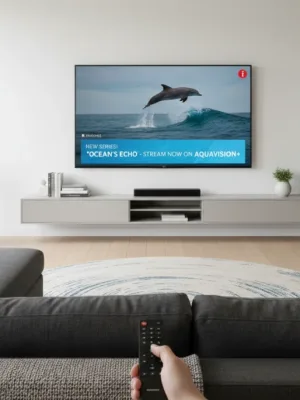
Virtually every major entertainment service in the United States now offers a lower-cost plan subsidized by commercial breaks. While switching can cut your monthly subscription bill by 40% to 60%, the decision involves more than just sitting through occasional commercial breaks. The shift toward ad-supported streaming tiers often alters the fundamental viewing experience in subtle ways.
Advertisements
When you downgrade from a standard or premium ad-free plan, services adjust several technical and functional features. These changes can impact home theater setups, family sharing, and offline playback during travel. Understanding these trade-offs before changing your plan helps you decide which subscriptions make sense with ads and which are worth keeping commercial-free.
The Real Ad Load: Minutes per Hour and Placement
The volume and frequency of commercials vary significantly depending on the platform and the type of content you watch. Most services aim for an average of four to five minutes of commercials per viewing hour, but the delivery method differs across apps.
- Pre-roll ads: Short segments running between 15 and 30 seconds that play before the program begins.
- Mid-roll breaks: Commercials inserted directly into natural scene transitions or legacy television broadcast cut points.
- Pause ads: Static or interactive banners that appear on screen whenever you pause your video for more than a few seconds.
Newer movies and prestige original series generally feature fewer interruptions, often relying solely on pre-roll promotions. In contrast, standard television episodes and syndicated comedies carry frequent mid-roll breaks that can disrupt pacing, particularly on content originally produced for uninterrupted viewing.
Video Resolution and Sound Limitations
One of the most significant sacrifices on budget plans involves audiovisual fidelity. If you have a 4K television or a dedicated surround sound system, standard ad-tier limits can visibly degrade your media playback.
Most basic ad plans cap streaming resolution at 1080p Full HD. High-end formats like 4K Ultra HD, Dolby Vision, and HDR10 are routinely reserved for higher ad-free or premium tiers. For everyday viewing on mobile screens or mid-sized displays, 1080p remains sharp and usable. However, on large screen sizes—typically 65 inches and above—the drop in dynamic range and resolution becomes noticeable.
Audio processing undergoes similar reductions. Spatial audio formats, including Dolby Atmos, are rarely supported on entry-level plans. Instead, most platforms default to standard 5.1 surround sound or basic stereo output.
Offline Downloads and Stream Limits
For frequent travelers and commuters, offline access is an essential feature. Across the industry, the ability to download movies and episodes to a mobile device for offline playback is either severely restricted or entirely removed on entry-level plans.
Because advertising servers require active internet connections to verify impressions and serve targeted sponsor spots, downloading files for offline use directly conflicts with the basic ad-tier business model. While a few providers offer limited download allowances on entry plans, most require an active ad-free plan to save titles locally.
Concurrent stream allowances can also shrink. While premium tiers frequently permit three to four simultaneous streams across different household devices, base plans usually limit playback to one or two active screens at a time.
Catalog Restrictions and Licensing Gaps
Many viewers assume that paying for an entry tier gives them access to the exact same library as the ad-free tier. In practice, content licensing contracts create occasional catalog gaps on ad tiers.
Certain legacy studio contracts permit a platform to stream a title without commercial interruption, but separate rights agreements are required to insert third-party advertisements into that same broadcast. When licensing negotiations stall or agreements predate ad-tier rollouts, the title remains accessible solely to ad-free subscribers. If you browse an ad-tier library, you may encounter locked icons on select licensed films and third-party series indicating an upgrade is required to view them.
Feature Comparison Across Major U.S. Services
The following table outlines the standard trade-offs typically found between entry ad-supported options and standard ad-free subscriptions across the U.S. streaming market. Specific terms and pricing change regularly, so verify current offerings directly with each service.
| Feature | Ad-Supported Tier | Ad-Free Tier |
|---|---|---|
| Average Monthly Cost | $6 to $10 | $14 to $23 |
| Maximum Video Quality | 1080p Full HD | 4K UHD / HDR (on select plans) |
| Audio Support | Stereo or 5.1 Surround | Dolby Atmos / Spatial Audio |
| Offline Downloads | Rarely included or heavily capped | Standard (typically 25–100 titles) |
| Simultaneous Screens | 1 to 2 streams | 2 to 4 streams |
| Content Library | Occasional licensing exclusions | Complete catalog access |
How to Decide If Ad Tiers Fit Your Viewing Habits
Deciding whether to embrace ad-supported streaming tiers comes down to where and how you consume entertainment. If you primarily watch casual series, comedies, or procedural dramas on a standard bedroom TV, tablet, or smartphone, the cost savings easily outweigh the technical reductions.
Conversely, if you rely on offline viewing during long flights, share a subscription among several members of an active household, or maintain a high-end 4K home theater system, keeping a commercial-free plan preserves the quality and convenience you expect. A practical approach is hybrid management: keep ad-supported plans for everyday background viewing and reserve ad-free tiers for platforms where visual immersion and download functionality matter most.