
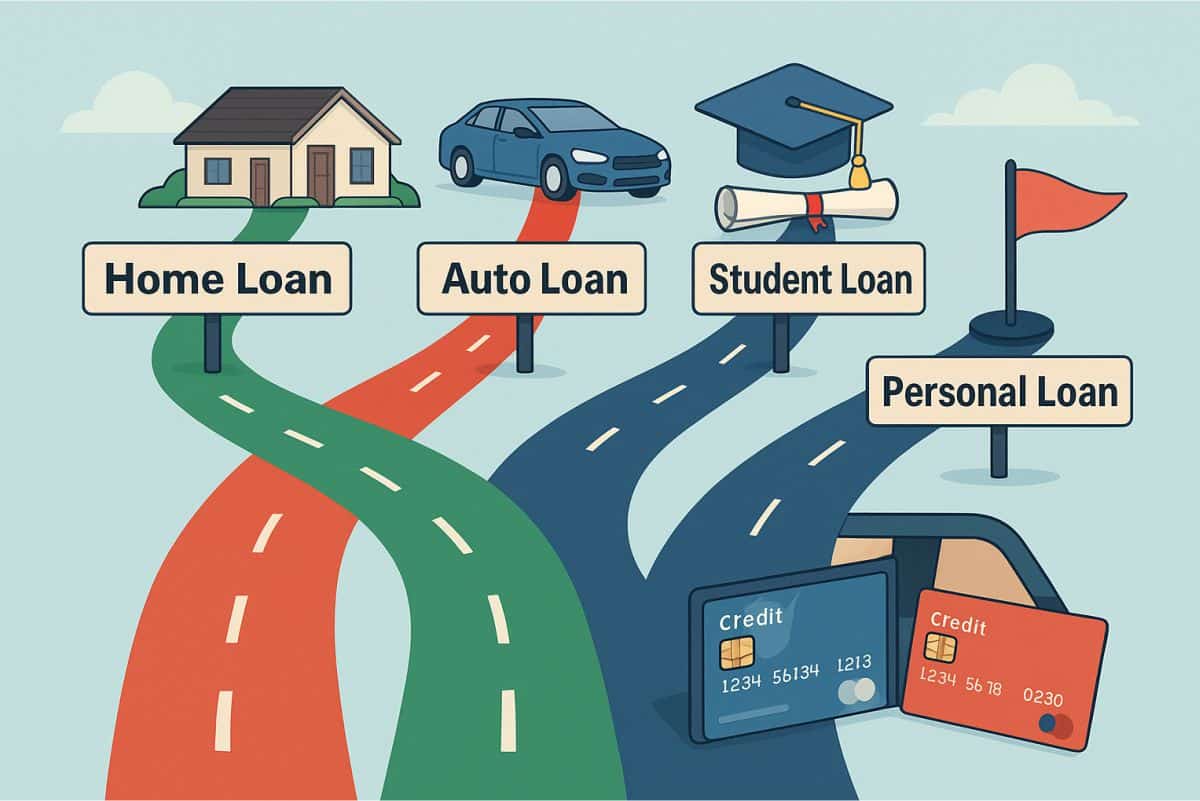
Navigating the complex world of borrowing can be overwhelming, with various loans serving different financial needs and coming with distinct terms, requirements, and repayment structures. Whether you’re financing a home purchase, covering education costs, or consolidating debt, understanding the landscape of available loans is essential for making informed financial decisions. This comprehensive guide explores the major types of loans available to American consumers, their key characteristics, and important considerations for each option.
Understanding Loan Basics
Before diving into specific loan types, it’s helpful to understand the fundamental elements that differentiate various loans:
Secured vs. Unsecured Loans
Loans generally fall into two primary categories:
- Secured loans require collateral—an asset the lender can claim if you fail to repay the loan. Examples include mortgages (secured by real estate) and auto loans (secured by vehicles).
- Unsecured loans don’t require collateral but typically feature higher interest rates to offset the lender’s increased risk. Personal loans and student loans usually fall into this category.
Fixed vs. Variable Interest Rates
The interest structure significantly impacts the cost and predictability of loans:
- Fixed-rate loans maintain the same interest rate throughout the loan term, providing consistent monthly payments and protection from market fluctuations.
- Variable-rate loans have interest rates that can change periodically based on market indexes, potentially leading to payment changes over time.
Open-End vs. Closed-End Loans
The loan’s structure determines how funds are accessed and repaid:
- Open-end loans (revolving credit) provide a credit limit that can be repeatedly used and repaid, such as credit cards and home equity lines of credit.
- Closed-end loans (installment credit) provide a one-time lump sum that’s repaid over a set period through scheduled payments. Most traditional loans fall into this category.
Personal Loans: Flexibility for Various Needs
Personal loans are versatile financial instruments that can fund a wide range of expenses—from home improvements to medical bills to debt consolidation.
Key Characteristics of Personal Loans
- Loan amounts: Typically $1,000 to $50,000 (some lenders offer up to $100,000)
- Loan terms: Usually 1 to 7 years
- Interest rates: Currently ranging from 6% to 36%, depending on creditworthiness
- Funding speed: As quick as same-day to one week
- Collateral: Generally unsecured, though secured personal loans exist
Types of Personal Loans
The personal loan category encompasses several specialized products:
Debt Consolidation Loans
These loans specifically target consumers with multiple high-interest debts. By combining several debts into a single loan with a lower interest rate, borrowers can:
- Simplify finances with one monthly payment
- Potentially reduce overall interest costs
- Create a clear payoff timeline
Emergency Loans
Designed for urgent financial needs, emergency loans feature:
- Expedited application and approval processes
- Rapid funding, sometimes within 24 hours
- Flexible use of funds for unexpected expenses
Credit-Builder Loans
These specialized loans help consumers with limited or damaged credit histories:
- Loan proceeds are held in a savings account while you make payments
- Payments are reported to credit bureaus, helping establish positive credit history
- Funds become available after completing the payment schedule
Mortgage Loans: Financing Home Ownership
Mortgage loans are specifically designed for real estate purchases and typically represent the largest debt most Americans will take on.
Primary Mortgage Types
Conventional Mortgages
These loans are not insured by the federal government:
- Conforming loans meet Fannie Mae and Freddie Mac requirements, with limits of $726,200 in most areas (2023)
- Non-conforming loans (including jumbo loans) exceed these limits
- Typically require down payments of 3% to 20%
- Generally require credit scores of 620 or higher
Government-Backed Mortgages
Several government programs help expand homeownership access:
- FHA loans: Insured by the Federal Housing Administration, featuring:
- Down payments as low as 3.5%
- More flexible credit requirements (minimum scores around 580)
- Mandatory mortgage insurance
- VA loans: For eligible service members, veterans, and spouses:
- No down payment required in many cases
- No private mortgage insurance
- Competitive interest rates
- USDA loans: For rural and some suburban homebuyers:
- No down payment required
- Lower mortgage insurance costs
- Property must be in USDA-eligible location
Mortgage Term Variations
Mortgage loans come with different repayment timeframes:
- 30-year fixed-rate mortgages: Lower monthly payments but higher total interest
- 15-year fixed-rate mortgages: Higher monthly payments but lower total interest and faster equity building
- Adjustable-rate mortgages (ARMs): Initial fixed rate (typically 3, 5, 7, or 10 years) followed by periodic rate adjustments
Auto Loans: Financing Vehicle Purchases
Auto loans represent the third-largest debt category for American consumers, after mortgages and student loans.
Sources of Auto Loans
Borrowers can obtain auto loans from several sources:
- Dealership financing: Convenient but not always the most competitive rates
- Banks and credit unions: Often offering better rates than dealerships
- Online lenders: Providing pre-approval before shopping
- Manufacturer financing: Sometimes offering promotional rates (including 0% APR)
Auto Loan Considerations
Key factors affecting auto loans include:
- Loan terms: Ranging from 24 to 84 months (though longer terms mean higher overall costs)
- New vs. used financing: New vehicles typically qualify for lower rates
- Down payment: Larger down payments reduce interest costs and help avoid being “underwater” (owing more than the vehicle’s value)
- Refinancing potential: Options to refinance for better rates after credit improvement
Student Loans: Financing Education
Educational loans help students and families manage the rising costs of college and graduate education.
Federal Student Loans
Government-issued student loans offer unique benefits:
Direct Subsidized Loans
- For undergraduate students with financial need
- Government pays interest during school, grace periods, and deferments
- Current interest rate: 5.50% (2023-2024)
Direct Unsubsidized Loans
- Available regardless of financial need
- Student responsible for all interest
- Current interest rates: 5.50% for undergraduates, 7.05% for graduate students (2023-2024)
Parent PLUS and Grad PLUS Loans
- For parents of dependent undergraduates or graduate/professional students
- Credit check required
- Current interest rate: 8.05% (2023-2024)
Federal Student Loan Benefits
- Income-driven repayment plans
- Deferment and forbearance options
- Potential loan forgiveness programs
- Fixed interest rates
Private Student Loans
Offered by banks, credit unions, and online lenders, these loans:
- Require credit checks and often a co-signer
- Typically feature variable interest rates (though fixed options exist)
- Lack federal programs for forgiveness or income-based repayment
- May offer higher loan limits than federal options
Home Equity Loans and Lines of Credit
These loans let homeowners tap into their property’s equity (the difference between the home’s value and mortgage balance).
Home Equity Loan
Often called a second mortgage, this closed-end loan:
- Provides a lump sum upfront
- Typically offers fixed interest rates
- Features terms from 5 to 30 years
- Secured by the home as collateral
Home Equity Line of Credit (HELOC)
This open-end loan works more like a credit card:
- Provides a revolving credit line to draw from as needed
- Usually features variable interest rates
- Typically has a 10-year draw period followed by a 20-year repayment period
- Also secured by the home
Tax Implications
The Tax Cuts and Jobs Act of 2017 modified the tax treatment of these loans:
- Interest is only deductible when used for home improvements
- No longer deductible for debt consolidation, education, or other purposes
Business Loans: Financing Entrepreneurship
Business loans provide capital for starting, operating, and expanding commercial ventures.
Small Business Administration (SBA) Loans
These government-backed loans include:
SBA 7(a) Loans
- The most common SBA loan program
- Loan amounts up to $5 million
- Partial guarantee by the SBA, reducing lender risk
- Can fund working capital, equipment, real estate, and more
SBA 504 Loans
- Specifically for major fixed assets like real estate and equipment
- Typically require 10% down payment
- Feature long terms (10-25 years)
SBA Microloans
- Smaller loans up to $50,000
- Designed for startups and very small businesses
- Often available to businesses that might not qualify for traditional bank loans
Traditional Bank Business Loans
Conventional business loans from financial institutions:
- Typically require established business history (2+ years)
- Feature more stringent qualification requirements than SBA loans
- Often offer larger loan amounts and potentially lower rates for well-qualified borrowers
Alternative Business Lending
Beyond traditional loans, businesses can access:
- Business lines of credit: Revolving funds available as needed
- Equipment financing: Loans specifically for purchasing business equipment
- Invoice factoring: Selling unpaid invoices for immediate capital
- Merchant cash advances: Receiving funds in exchange for a percentage of daily credit card sales
Specialty Loan Types
Several unique loan products serve specific financing needs:
Construction Loans
These short-term loans finance the building of new structures:
- Typically converted to permanent mortgages upon completion
- Feature draw schedules tied to construction milestones
- Require detailed building plans and contractor agreements
Payday Loans and Cash Advances
These controversial short-term loans:
- Provide quick access to small amounts of cash
- Charge extremely high fees and interest rates (often 300-400% APR)
- Typically require repayment by next paycheck
- Are heavily regulated or prohibited in many states
- Should generally be avoided in favor of alternative options
Title Loans
These loans use vehicle titles as collateral:
- Allow borrowers to continue using their vehicle
- Typically charge high interest rates (often 100-300% APR)
- Risk vehicle repossession if not repaid
- Usually should be considered only as a last resort
Factors Affecting Loan Approval and Terms
Lenders evaluate several key factors when considering loan applications:
Credit Score and History
Your credit profile significantly impacts:
- Approval likelihood
- Interest rates offered
- Loan amounts available
- Down payment requirements
- Need for co-signers
Debt-to-Income (DTI) Ratio
This calculation compares your monthly debt payments to gross income:
- Conventional mortgages typically require DTI below 43% (though exceptions exist)
- Personal loans may allow higher DTI ratios
- Lower ratios generally qualify for better loan terms
Income and Employment History
Lenders verify your ability to repay through:
- Stable employment history (typically 2+ years)
- Reliable income sources
- Appropriate income for the requested loan amount
Collateral Value (for Secured Loans)
For secured loans, lenders evaluate:
- Current market value of the collateral
- Loan-to-value ratio (the loan amount compared to the collateral’s value)
- Condition and expected depreciation of the asset
Choosing the Right Loan for Your Needs
Selecting the appropriate loan type involves careful consideration of:
Purpose and Eligibility
- Match the loan type to your specific need (home purchase, education, etc.)
- Verify you meet the basic eligibility requirements
- Consider specialized loans designed for your situation (first-time homebuyer programs, etc.)
Cost Comparison
Evaluate the true cost of loans by examining:
- Interest rates
- Origination fees and closing costs
- Prepayment penalties
- Total interest over the loan term
Repayment Flexibility
Consider how the loan’s repayment structure aligns with your financial situation:
- Fixed vs. variable payments
- Ability to make extra payments without penalties
- Hardship options like forbearance or deferment
- Refinancing potential
Final Thoughts on Navigating the Loan Landscape
The world of loans offers solutions for nearly every financing need, but wise borrowing requires understanding the options and their implications for your financial future. Before committing to any loan, take time to:
- Research multiple lenders and loan products
- Compare rates and terms through prequalification
- Read all disclosures carefully
- Consider the loan’s impact on your long-term financial goals
- Explore alternatives to borrowing when possible
Remember that loans are powerful financial tools that can either help build wealth (as with strategic mortgage loans) or create financial stress when misused. By understanding the various types of loans and their appropriate applications, you can make borrowing decisions that support your financial wellbeing.
For more information about making smart financial choices, explore our guides on improving your credit score, managing personal finances, and navigating the banking system effectively.
