
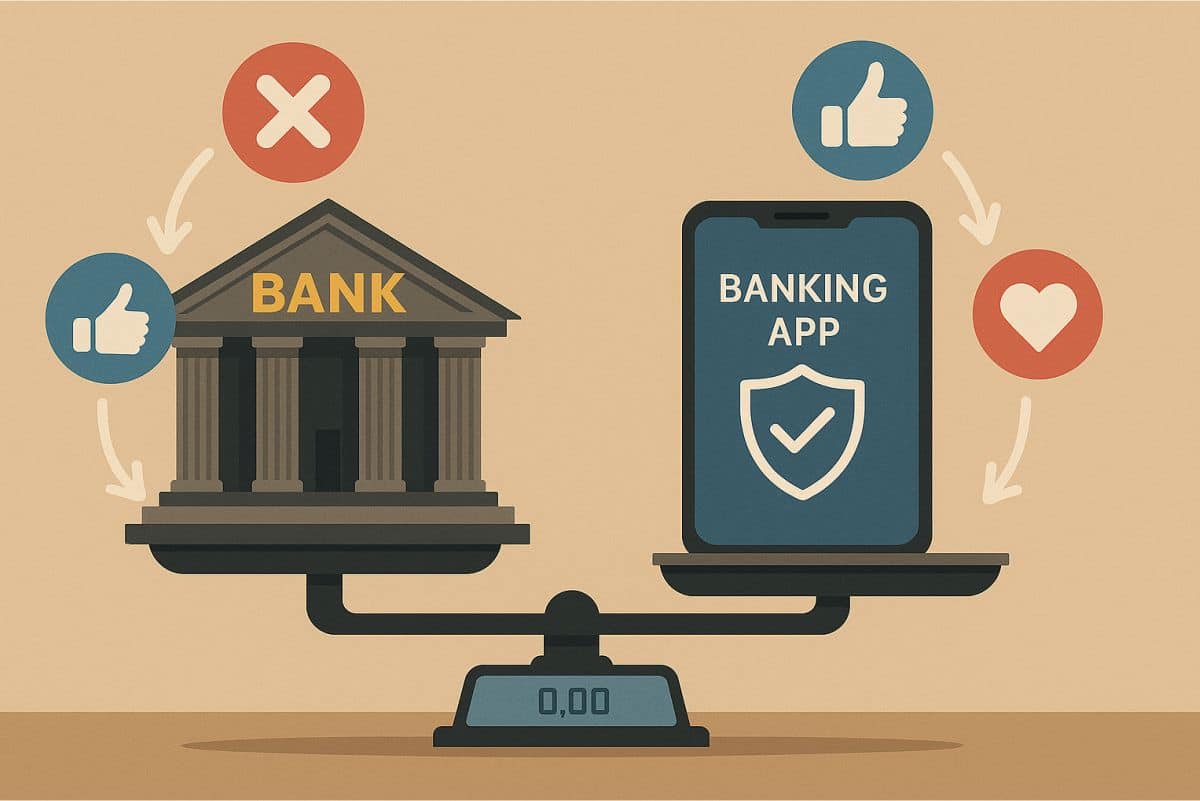
The American banking landscape has transformed dramatically over the past decade. While traditional brick-and-mortar banks once dominated the financial services industry, online banking alternatives have rapidly gained market share, with 76% of Americans now using mobile banking apps. For consumers navigating these options, understanding the strengths and limitations of both banking models is essential for making informed financial decisions. This comprehensive guide examines how online and traditional banking compare across key factors that matter most to modern consumers.
The Rise of Online Banking in America
Online banking encompasses two distinct categories:
- Digital banks (neobanks): Financial technology companies operating exclusively online without physical branches. Examples include Chime, Ally, and Varo.
- Online divisions of traditional banks: Digital platforms offered by established financial institutions, such as Capital One 360, Marcus by Goldman Sachs, and Chase Online.
The growth of online banking has been remarkable, with digital-only banks now serving over 50 million American customers. This expansion has been driven by changing consumer preferences, technological innovation, and the appeal of lower-fee banking options.
Fee Structures and Costs: Who Offers Better Value?
Online Banking Fee Advantages
Digital-focused banking typically offers significant cost advantages:
- Monthly maintenance fees: Most online banks charge no monthly fees, compared to an average of $14 at traditional banks.
- Minimum balance requirements: Online banks generally have low or no minimum balance requirements.
- Overdraft fees: Many online banks offer more generous overdraft policies, with fees averaging $25 compared to $35 at traditional institutions.
- ATM fees: Leading online banks provide extensive fee-free ATM networks or reimburse fees incurred at any ATM.
Traditional Banking Fee Considerations
Brick-and-mortar banks typically have more complex fee structures:
- More fee categories (account maintenance, paper statements, teller services)
- Higher minimum balance requirements to waive monthly fees
- More expensive overdraft programs
- Potential for “relationship banking” fee waivers when maintaining multiple accounts
According to a CFPB study, the average American household pays $250 annually in banking fees, though this amount varies significantly between online and traditional banking customers.
Interest Rates and Earning Potential
Online Banking Interest Advantages
With lower overhead costs, online banks typically offer more competitive interest rates:
- Savings accounts: Online banks offer APYs averaging 3.0-4.0% (as of 2025), compared to 0.1-0.3% at most traditional banks.
- Checking accounts: Many online banks offer interest-bearing checking accounts with rates of 0.25-1.0%, while traditional banks rarely pay meaningful interest on checking balances.
- Certificates of deposit (CDs): Online CD rates typically exceed traditional bank rates by 0.5-1.5%.
For a consumer with $10,000 in savings, the difference between a 0.1% APY at a traditional bank and a 3.5% APY at an online bank equals $340 annually in additional interest.
Traditional Banking Rate Considerations
While traditional banks generally offer lower interest rates on deposit accounts, they sometimes provide:
- Relationship rates: Higher interest for customers with multiple accounts or substantial balances
- Promotional rates: Short-term high-yield offers to attract new deposits
- Special CD terms: Unique CD products with competitive rates for specific terms
Account Access and Customer Service
Online Banking Accessibility
Digital banking platforms emphasize 24/7 accessibility:
- Around-the-clock account access via web and mobile applications
- Digital customer service channels (chat, email, social media)
- Phone support (though hours vary by institution)
- Extensive self-service options for account management
Traditional Banking Accessibility
Brick-and-mortar banks offer multi-channel access:
- In-person service during branch hours (typically 9am-5pm weekdays, limited weekend hours)
- ATM access (often with a larger proprietary network)
- Digital banking platforms similar to online-only banks
- Phone support (often with more extended hours than online-only banks)
According to a J.D. Power study, 78% of banking customers who use both digital and branch services report higher satisfaction than those who use only one channel.
Transaction Capabilities and Limitations
Online Banking Transaction Features
Online banks excel at digital transactions:
- Seamless electronic transfers between accounts
- Free person-to-person payments
- Mobile check deposit
- Bill payment services
- Digital wallet integration (Apple Pay, Google Pay, etc.)
However, they may have limitations with:
- Cash deposits (often requiring third-party retail locations)
- Large cash withdrawals (typically limited by ATM maximums)
- International wire transfers (not available at all online banks)
- Cashier’s checks (may require mail delivery)
Traditional Banking Transaction Capabilities
Traditional banks typically offer comprehensive transaction services:
- All digital transaction capabilities of online banks
- In-branch cash deposits and withdrawals without limits
- Immediate access to cashier’s checks and money orders
- In-person wire transfers with same-day processing
- Currency exchange services
- Safe deposit boxes for valuable storage
For consumers who frequently handle cash or require specialized financial instruments, these additional services can provide significant value.
Security Considerations for Both Banking Models
Online Banking Security
Digital banks invest heavily in cybersecurity:
- Advanced encryption for data protection
- Multi-factor authentication
- Biometric login options
- Real-time fraud monitoring
- Zero-liability policies for unauthorized transactions
However, potential security concerns include:
- Phishing attacks targeting online banking customers
- Potential for credential theft through malware
- Dependence on customer’s personal device security
Traditional Banking Security
Traditional banks combine physical and digital security measures:
- All digital security features of online banks
- Physical security for in-branch transactions
- In-person identity verification options
- Paper documentation alternatives
Both banking models are governed by the same federal regulations regarding fraud protection and deposit insurance. The FDIC and NCUA provide the same $250,000 insurance coverage per depositor regardless of whether an institution operates online or through physical branches.
Specialized Banking Services and Product Range
Online Banking Product Offerings
Online banks typically focus on core deposit accounts:
- Checking and savings accounts
- Money market accounts
- Certificates of deposit
- Personal loans (at some institutions)
- Credit cards (at some institutions)
Many online banks partner with other financial providers to offer additional services like investment accounts and mortgages.
Traditional Banking Service Advantages
Traditional banks generally offer more comprehensive financial services:
- Full range of deposit accounts
- Mortgage and home equity lending
- Business banking services
- Wealth management and investment services
- Safe deposit boxes
- Notary services
- In-person financial consultations
For consumers with complex financial needs or those who prefer bundling services with one institution, traditional banks may offer valuable convenience through relationship banking.
Making the Decision: Which Banking Model Is Right for You?
Online Banking May Be Ideal If You:
- Prioritize minimal fees and higher interest rates
- Rarely or never need to deposit cash
- Feel comfortable managing finances through digital channels
- Value 24/7 account access through mobile devices
- Have straightforward banking needs focused on everyday transactions
- Travel frequently and need flexible ATM access
Traditional Banking May Be Preferable If You:
- Regularly deposit or withdraw cash
- Value face-to-face interactions for complex financial matters
- Need immediate access to specialized financial instruments (cashier’s checks, notary services)
- Prefer to consolidate all financial services with one institution
- Own a small business with routine cash transactions
- Appreciate relationship banking benefits that come with maintaining multiple accounts
The Hybrid Approach: Getting the Best of Both Worlds
Many financial experts recommend a hybrid strategy that leverages the strengths of both banking models:
- Primary checking account: Online bank for daily transactions, bill payments, and recurring deposits, benefiting from low fees and convenient digital tools.
- High-yield savings: Online bank for emergency funds and short-term savings to maximize interest earnings.
- Local bank relationship: Maintaining a minimal account at a local credit union or community bank for occasional services like notary, cashier’s checks, and cash deposits.
This approach allows consumers to minimize fees, maximize interest, and maintain access to specialized services when needed.
The Future of Banking: Converging Models
The distinction between online and traditional banking continues to blur as:
- Traditional banks invest heavily in digital platforms and mobile apps
- Online banks expand service offerings and create innovative solutions for cash handling
- Both models incorporate emerging technologies like artificial intelligence, voice banking, and enhanced personalization
- Partnerships between fintech companies and established banks create hybrid service models
For consumers, this convergence promises more choices and better banking experiences across all channels.
Final Thoughts on Choosing Your Banking Partner
When evaluating banking options, consider these key questions:
- How do you typically deposit money? (Direct deposit, checks, cash)
- How often do you need specialized services like cashier’s checks or notary services?
- How important are in-person interactions for your financial comfort?
- Are you looking to build a broader financial relationship (investments, loans, etc.)?
- How much do fees impact your financial goals?
- What level of interest on deposits would meaningfully affect your savings?
By answering these questions honestly, you can determine which banking model—or combination of models—best serves your unique financial needs.
Whether you choose an online bank, traditional institution, or hybrid approach, regularly reassessing your banking relationship ensures you continue receiving the best possible service and value as both your needs and the banking landscape evolve.
For more financial guidance, explore our articles on improving your credit score, selecting the right credit card, and creating a personal financial plan that supports your long-term goals.
