
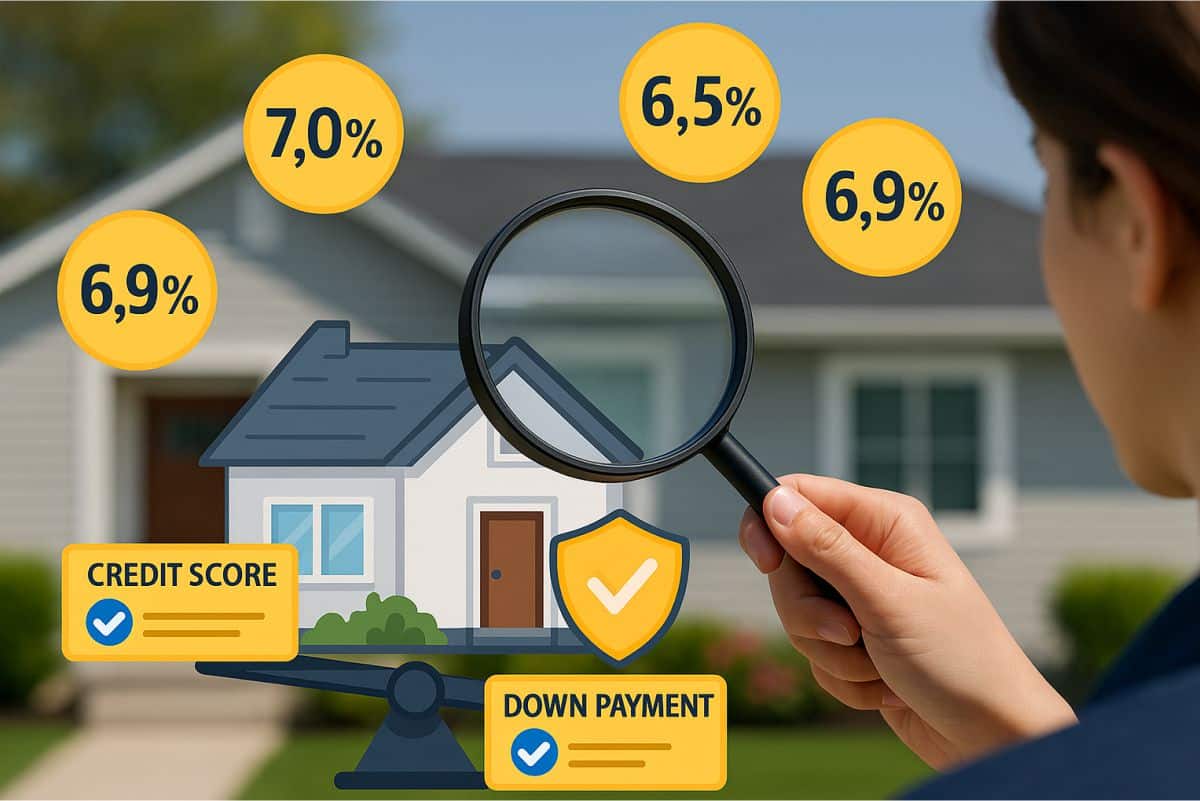
For most Americans, a home purchase represents the largest financial transaction of their lives. The interest rate on your mortgage loans can significantly impact your monthly payments and the total amount paid over the loan’s lifetime. Even a small percentage difference can translate to thousands of dollars saved or spent. This guide explores practical strategies to secure the most favorable mortgage loans rate in today’s market.
Understanding Today’s Mortgage Loans Market
As of mid-2025, mortgage loans rates have stabilized somewhat after recent volatility. Current average rates for conventional 30-year fixed mortgage loans hover around 5.5-6.5%, though these figures vary weekly by lender, loan type, and borrower qualifications.
Key factors influencing today’s mortgage loans market include Federal Reserve policies, inflation trends, bond market performance, housing supply and demand, and banking sector stability. While understanding these market forces provides context, your personal financial situation remains the most significant factor in determining your available rates.
Factors That Influence Your Personal Mortgage Loans Rate
Credit Score Impact
Your credit score significantly affects mortgage loans rates:
Credit Score RangePotential Rate Impact760-850 (Excellent)Lowest available rates700-759 (Very Good)Slightly higher (0.1-0.3%)660-699 (Good)Moderately higher (0.5-1.0%)620-659 (Fair)Significantly higher (1.0-1.5%)Below 620Limited options, much higher rates
Even a 50-point credit score improvement could reduce your mortgage loans rate by 0.25% or more.
Down Payment Size
Your down payment affects both rates and other loan costs:
- 20% or more: Best rates and no private mortgage insurance (PMI)
- 10-19%: Slightly higher rates with PMI
- 3-9%: Higher rates and more expensive PMI
- Under 3%: Limited to specific programs with potentially higher rates
Other Key Factors
- Debt-to-Income Ratio: Lower ratios (under 36%) qualify for better rates
- Loan Type and Term: Conventional, FHA, VA, and USDA loans offer different rates
- Property Type: Single-family homes receive lower rates than condos, multi-unit, or investment properties
Preparing Your Finances Before Applying
Improve Your Credit Score
To maximize your score before applying for mortgage loans:
- Review and correct errors on credit reports
- Pay down credit card balances below 30% of limits
- Avoid applying for new credit for 6-12 months
- Make all payments on time for at least 12 consecutive months
- Resolve collections accounts (consult a mortgage professional first)
Strengthen Your Financial Position
- Save for a larger down payment (aim for 20% if possible)
- Reduce existing debt to lower your DTI ratio
- Maintain stable employment, preferably with the same employer
- Document all income sources thoroughly
Strategic Approaches to Mortgage Loans Shopping
Shop Within a Focused Timeframe
When comparing mortgage loans, concentrate your applications within a short period:
- The FICO scoring model counts multiple mortgage inquiries within 14-45 days as a single inquiry
- This “shopping period” protects your credit score while allowing comprehensive comparison
- Aim to complete all applications within 14 days for maximum protection
Look Beyond the Interest Rate
Evaluate mortgage loans based on the complete cost picture:
- Annual Percentage Rate (APR): Reflects total cost including interest rate and certain fees
- Lender fees: Application fees, origination charges, underwriting fees
- Discount points: Optional upfront payments to reduce your interest rate
- Lender credits: Payments from the lender to offset closing costs
Request Loan Estimates from each lender to compare these elements in a standardized format.
Consider Rate Lock Strategies
Rate locks protect you from market fluctuations during the mortgage loans process:
- Standard locks typically range from 30-60 days
- Select a lock period that allows sufficient time to close
- Consider float-down provisions that allow you to secure lower rates if they drop
Alternative Strategies for Today’s Market
Adjustable-Rate Mortgage Consideration
ARMs offer initially lower rates in exchange for future uncertainty:
- Hybrid ARMs (5/1, 7/1, 10/1) maintain a fixed rate initially before adjusting
- Can save 0.5-1.0% compared to fixed-rate mortgage loans during the initial period
- Most beneficial if you plan to move or refinance before the first adjustment
Explore All Loan Types
Different mortgage loans programs suit different situations:
- Conventional loans: Competitive rates for well-qualified borrowers
- FHA loans: More flexible approval criteria with slightly higher rates
- VA loans: Below-market rates for eligible veterans
- USDA loans: Competitive rates for rural properties
Leverage Negotiation
Use competition to your advantage:
- Obtain written Loan Estimates from multiple lenders
- Present the best offer to preferred lenders and request matching or better terms
- Focus negotiations on lender-controlled fees
- Consider relationship benefits for existing banking customers
Working with Mortgage Professionals
The right guidance can significantly impact your mortgage loans outcome:
- Mortgage brokers access multiple lenders, potentially finding better matches for unique situations
- Direct lenders may offer more streamlined processes
- Credit unions often feature competitive rates and member-focused policies
- Online lenders frequently offer convenient processes and competitive rates
Interview multiple professionals to find the right fit for your situation.
Final Considerations
Documentation Preparation
Being prepared with documentation streamlines the mortgage loans process:
- Recent pay stubs, W-2 forms, and tax returns
- Bank and investment account statements
- Identification documents
- Employment verification details
- Current debt obligation information
Get a Strong Pre-Approval
- Pre-qualification: Basic review of self-reported information
- Pre-approval: Verified documentation review with credit check
- Underwritten pre-approval: Most thorough review, closest to final approval
A strong pre-approval strengthens your negotiating position with both sellers and lenders.
Conclusion
Securing the best mortgage loans rate requires understanding both market conditions and your personal financial position. By improving your financial profile, shopping strategically, and carefully comparing offers, you can potentially save thousands of dollars over your loan’s lifetime.
For more information about optimizing your financial situation before applying for mortgage loans, explore our guides on improving your credit score, effective debt management, and banking strategies.
