
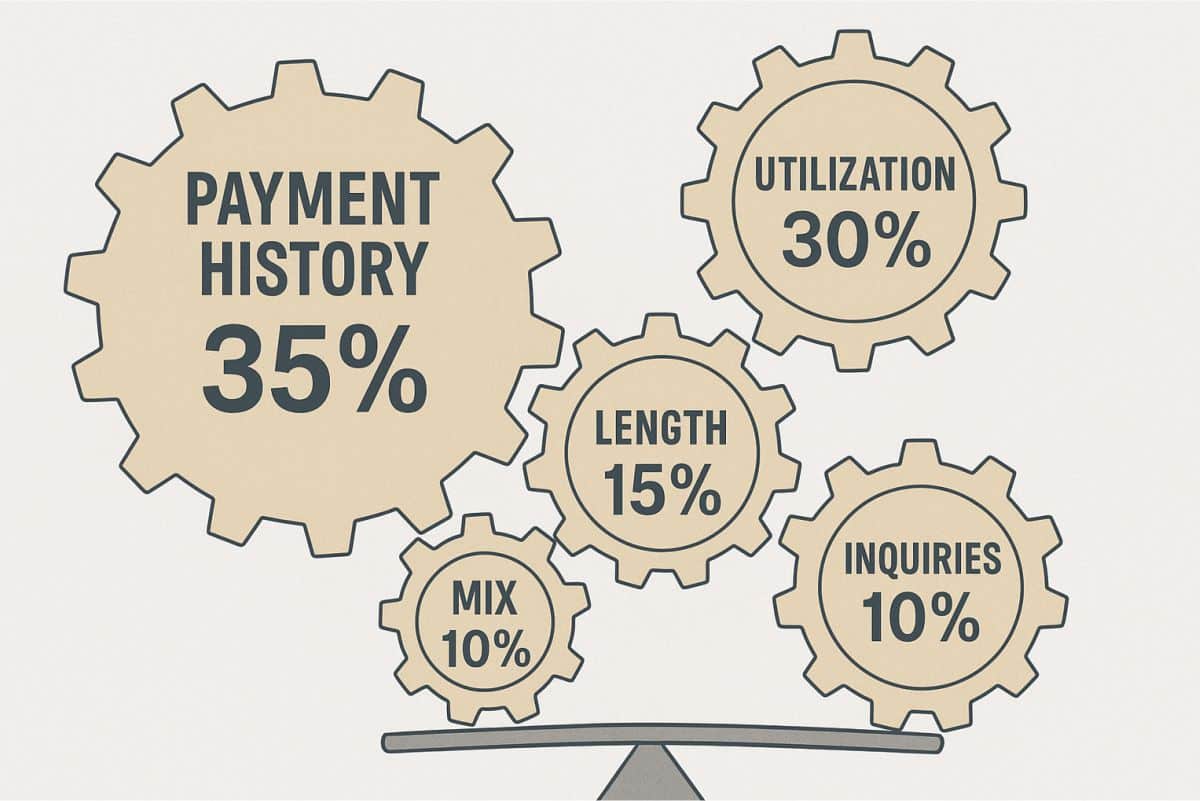
Your credit score is one of the most influential numbers in your financial life. This three-digit rating affects your ability to secure loans, obtain favorable interest rates, rent apartments, and sometimes even land a job. Despite its importance, many Americans don’t fully understand how their credit score is calculated or what specific actions they can take to improve it. This comprehensive guide breaks down the five key factors that determine your credit score and provides actionable strategies to enhance each component.
Understanding Credit Score Basics
Before diving into the specific factors, it’s important to understand the fundamentals of how the credit score system works in America.
The most widely used credit score model is the FICO Score, which ranges from 300 to 850. According to this scale, credit score ratings typically fall into these categories:
- Excellent: 800-850
- Very Good: 740-799
- Good: 670-739
- Fair: 580-669
- Poor: 300-579
Your credit score is calculated using information from your credit reports, which are compiled by three major credit bureaus: Equifax, Experian, and TransUnion. While each bureau may have slightly different information, they all evaluate the same five core factors when calculating your credit score.
Factor 1: Payment History (35% of Your Credit Score)
Payment history is the single most influential component of your credit score, accounting for approximately 35% of the calculation. This factor evaluates whether you’ve paid past credit accounts on time.
What Impacts Your Payment History
- On-time payments strengthen your credit score
- Late payments (30, 60, 90+ days late) damage your credit score
- Collections accounts significantly harm your credit score
- Charge-offs, bankruptcies, foreclosures, liens, and judgments severely impact your credit score
The more recent the negative item, the greater its impact on your credit score. For example, a 30-day late payment from last month will affect your credit score more than one from five years ago.
How to Improve Your Payment History
- Set up automatic payments for at least the minimum amount due to prevent missed deadlines
- Create payment reminders through calendar alerts or your bank’s notification system
- Contact creditors immediately if you’re facing financial hardship to discuss hardship programs
- Address past-due accounts before they go to collections
- Use tools like budget apps to ensure you have sufficient funds for payments
If you have negative items on your report, time is the primary healer. Most negative marks on payment history will remain on your credit report for seven years, though their impact on your credit score diminishes over time.
Factor 2: Credit Utilization (30% of Your Credit Score)
Credit utilization refers to the percentage of your available credit that you’re currently using and accounts for approximately 30% of your credit score. This factor is primarily concerned with revolving credit accounts like credit cards.
What Impacts Your Credit Utilization
- Overall utilization ratio across all accounts affects your credit score
- Per-card utilization on individual accounts impacts your credit score
- Number of accounts carrying balances influences your credit score
- Total balances on revolving accounts factor into your credit score
Lower utilization rates are better for your credit score. Financial experts typically recommend keeping your utilization below 30%, with the ideal range being under 10% for optimal credit score impact.
How to Improve Your Credit Utilization
- Pay down existing credit card balances to reduce your utilization ratio
- Make multiple payments throughout the month to keep balances low
- Request credit limit increases on existing accounts to improve your ratio
- Keep old credit cards open even if rarely used to maintain available credit
- Track your utilization ratio using banking apps or credit score monitoring services
- Time your credit card payments before statement closing dates, when balances are reported
Unlike payment history, improvements to credit utilization can rapidly enhance your credit score. Reducing your utilization ratio can boost your score within a single reporting cycle, sometimes in as little as 30 days.
Factor 3: Length of Credit History (15% of Your Credit Score)
The length of your credit history accounts for approximately 15% of your credit score. This factor evaluates how long you’ve been using credit and demonstrates your experience managing financial obligations over time.
What Impacts Your Credit History Length
- Age of your oldest account influences your credit score
- Age of your newest account affects your credit score
- Average age of all accounts contributes to your credit score
- How long specific account types have been established impacts your credit score
- How long since accounts have been used factors into your credit score
Generally, a longer credit history leads to a higher credit score, as it provides more data about your financial behavior over time.
How to Improve Your Credit History Length
- Keep older accounts open even if you rarely use them
- Use older cards occasionally (once every few months) to prevent account closure due to inactivity
- Become an authorized user on an older account belonging to a responsible family member
- Be strategic about opening new accounts, as they lower your average account age
- Consider keeping your first credit card as a foundation of your credit history
Improving this factor requires patience, as there’s no quick way to add years to your credit history. Focus on maintaining existing accounts while responsibly adding new credit when necessary.
Factor 4: Credit Mix (10% of Your Credit Score)
Credit mix refers to the variety of credit accounts you maintain and contributes approximately 10% to your credit score. Having experience with different types of credit demonstrates your ability to manage various financial obligations.
What Impacts Your Credit Mix
- Revolving accounts (credit cards, retail cards, lines of credit) factor into your credit score
- Installment loans (mortgages, auto loans, personal loans, student loans) affect your credit score
- Balance between different account types influences your credit score
- Number of accounts in each category contributes to your credit score
A healthy mix typically includes both revolving and installment accounts, showing that you can handle different types of credit responsibly.
How to Improve Your Credit Mix
- Assess your current credit portfolio to identify gaps in your credit mix
- Consider adding missing account types when financially appropriate
- Use secured credit cards or credit-builder loans if you need to establish credit
- Don’t open new accounts solely for credit mix if they don’t align with your financial needs
- Maintain a small balance on a credit card and pay it off monthly to demonstrate responsible revolving credit use
While diversifying your credit mix can help your credit score, it’s important not to take on unnecessary debt just to improve this factor. Focus on naturally developing a varied credit history as your financial needs evolve.
Factor 5: New Credit Inquiries (10% of Your Credit Score)
The new credit factor examines how frequently you’re applying for credit and accounts for approximately 10% of your credit score. Multiple credit applications in a short period can signal financial distress to lenders.
What Impacts Your New Credit Factor
- Hard inquiries from credit applications affect your credit score
- Recent account openings influence your credit score
- Time since most recent inquiry factors into your credit score
- Number of inquiries within specific timeframes impacts your credit score
Each hard inquiry typically lowers your credit score by 5-10 points temporarily, though the effect diminishes over time.
How to Improve Your New Credit Factor
- Apply for new credit sparingly and only when necessary
- Research qualification requirements before applying to avoid unnecessary inquiries
- Rate shop within focused timeframes (FICO treats multiple inquiries for the same loan type within 14-45 days as a single inquiry)
- Request pre-qualifications which use soft inquiries before formal applications
- Monitor your credit report to ensure all inquiries are legitimate
- Wait several months between credit applications when possible
The impact of hard inquiries on your credit score fades relatively quickly, typically within 12 months, and they drop off your credit report entirely after two years.
Creating a Balanced Credit Score Improvement Strategy
Since each factor contributes differently to your overall credit score, it’s wise to prioritize your improvement efforts strategically:
- First, address payment history issues by bringing accounts current and establishing on-time payment habits, as this has the greatest impact on your credit score
- Next, focus on credit utilization by paying down revolving balances, which can yield relatively quick improvements to your credit score
- Maintain and nurture credit history length by keeping older accounts active and being thoughtful about opening new accounts
- Gradually develop a diverse credit mix through natural financial milestones rather than forced account openings
- Be strategic about new credit applications by researching requirements, rate shopping efficiently, and spacing applications when possible
Monitoring Your Progress
Tracking your credit score improvement efforts is essential for staying motivated and adjusting your strategy as needed:
- Use free credit score services offered by many credit cards and financial institutions
- Consider paid credit monitoring services for more comprehensive tracking
- Request free annual credit reports from annualcreditreport.com
- Review your credit reports for errors and dispute inaccuracies promptly
- Track specific metrics related to each factor (utilization percentage, average account age, etc.)
Many consumers see noticeable credit score improvements within 3-6 months of implementing targeted strategies, with more substantial gains appearing after 12-24 months of consistent responsible behavior.
Understanding Credit Score Variations
It’s important to recognize that you don’t have just one credit score but many variations:
- Different scoring models (FICO vs. VantageScore)
- Score variations between credit bureaus based on what information they have
- Industry-specific scores (auto lenders, mortgage lenders, etc.)
- Different score versions (FICO 8, FICO 9, FICO 10, etc.)
This explains why your credit score might appear different depending on where you check it. Focus on the factors that impact all scores rather than specific number fluctuations.
The Long-Term Credit Score Perspective
Building an excellent credit score is a marathon, not a sprint. The most substantial credit score improvements come from consistent, responsible credit habits over time:
- Paying bills on time, every time creates a strong payment history
- Keeping credit card balances low demonstrates responsible usage
- Applying for credit strategically shows thoughtful financial management
- Building a diverse credit mix naturally over time demonstrates versatility
- Maintaining older accounts establishes credit longevity
By understanding how each factor influences your credit score and implementing targeted improvement strategies, you can systematically enhance your creditworthiness and unlock better financial opportunities.
For more information about optimizing your financial health, explore our guides on selecting the right credit cards, managing personal finances, and navigating the banking system effectively.
